India-Based Data Entry Outsourcing Support Serving USA, Canada, UK, Australia, Europe, New Zealand, Singapore, UAE
Illustrative Japan Case Study

Japanese-English Equipment Maintenance Index

Service sheets used Japanese asset names, local date formats and inconsistent equipment references. During the Japanese-English Equipment Maintenance Index in Japan review, staff could not confirm archive coverage without repeatedly comparing index rows with the original source collection.

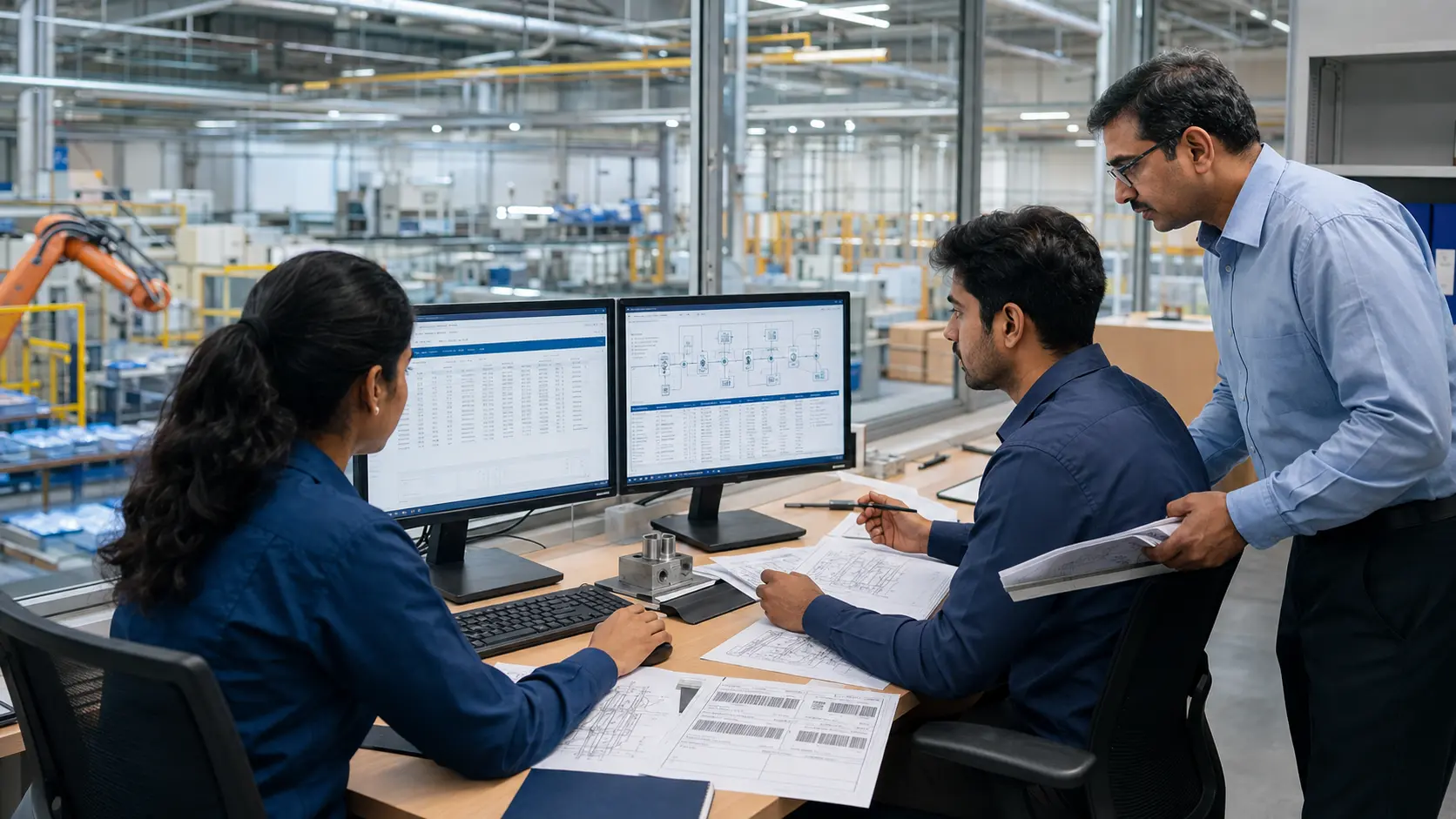
Japanese-English Equipment Maintenance Index — Industrial Manufacturing case study visual
Project
Japanese-English Equipment Maintenance Index
Volume
34,900 equipment and maintenance-reference records across six facilities — completed in 3 weeks
Client Role
Maintenance Information Manager
Industry
Industrial Manufacturing
Country
Japan
Delivery Model
Single-facility pilot, plant batches and final asset-to-job reconciliation
Client Details

The operating environment behind the request

A Japanese industrial group creating a bilingual maintenance information index.

The primary client-side owner was the Maintenance Information Manager. That role coordinated source access, destination rules, reviewer availability and acceptance of each delivery. SDES would provide controlled production capacity; the client would retain authority over the business meaning of the records.

Project Details

What needed to change

Problem: Service sheets used Japanese asset names, local date formats and inconsistent equipment references. During the Japanese-English Equipment Maintenance Index in Japan review, staff could not confirm archive coverage without repeatedly comparing index rows with the original source collection.

Required solution: Original Japanese text was retained alongside approved English fields and confirmed asset identifiers. For Japanese-English Equipment Maintenance Index in Japan, each index row retained its source filename or document reference, and unclear classifications were separated for records-owner review.

Planned outcome: Operations received a bilingual maintenance index without changing engineering meaning or status. After completing Japanese-English Equipment Maintenance Index in Japan, the archive became easier to migrate, audit and retrieve without losing the link to the original source files.

Volume and Source Profile

Workload measured by records, relationships and source variation

The completed scope covered 34,900 equipment and maintenance-reference records across six facilities — completed in 3 weeks. Effort also reflected field count, document readability, relationship complexity, exception frequency and destination validation.

Source material

  • Japanese service sheets
  • asset registers
  • English equipment lists
  • job records and location maps

Core fields and relationships

  • Asset ID
  • Japanese name
  • English name
  • facility
  • service date
  • job reference
  • component and source status
Process

A controlled route from representative sample to accepted delivery

Scope

Confirm the destination and authority

The client defines required fields, accepted formats, controlling sources and decisions that must be escalated. The operating guide records those boundaries before entry begins.

Profile

Measure variation inside the volume

The review covered the stated volume of 34,900 equipment and maintenance-reference records across six facilities — completed in 3 weeks, including ordinary records, incomplete sources and difficult relationships.

Pilot

Test the rules on real exceptions

The pilot uses Japanese service sheets, asset registers, English equipment lists, job records and location maps. Questions are returned with exact record and source references so approved answers can enter the production guide.

Produce

Release controlled batches

Single-facility pilot, plant batches and final asset-to-job reconciliation. Completed, held, excluded and rejected items remain distinguishable throughout production.

Review

Check fields by operational consequence

Asset identity, original Japanese text, translated approved field, date sequence and facility mapping receive focused checks. Unsupported assumptions do not enter the clean output merely to complete a record.

Reconcile

Account for every received source

Batch totals, exception counts and source manifests are compared before final release. The handoff identifies what was delivered, held and returned for client direction.

Quality and Access Controls

Checks designed around the risk in this dataset

The review focus would cover Asset identity, original Japanese text, translated approved field, date sequence and facility mapping. Sampling depth and second-pass review would be agreed according to field significance and source quality rather than advertised as an unsupported universal accuracy percentage.

Operators used controlled exports and could not issue maintenance work, change asset status or access plant controls.

Responsibility Boundary

What remains with the client

Japanese engineering teams approved translation, condition, maintenance status and operational action.

Maintenance Information Manager or another authorised owner would resolve exceptions that change meaning, identity, status, classification or commercial treatment. SDES would document the question and apply only the approved resolution.

Delivery Details

Separate clean production from items requiring judgement

The handoff would follow the destination structure and preserve enough source information for review and recovery. Delivery timing would follow Single-facility pilot, plant batches and final asset-to-job reconciliation.

Bilingual maintenance index

asset-match queue

facility files and job-record coverage report

Acceptance and change control

The client would validate the pilot before scale and review each scheduled release. Rejections caused by entry error would be corrected against the approved guide. New rules, changed destination fields or newly supplied sources would be recorded as controlled changes so earlier batches were not silently processed under later assumptions.

Client Feedback

Review perspective after the handoff

4.5/5

The work on Japanese-English Equipment Maintenance Index gave our team a dependable handoff. Confirmed records were ready for operational use, while uncertain items came back with clear source references. Our reviewers could focus on the decisions that required internal ownership instead of rechecking the full dataset. Outsourcing to SDES has delivered meaningful savings in time and operating cost.