India-Based Data Entry Outsourcing Support Serving USA, Canada, UK, Australia, Europe, New Zealand, Singapore, UAE
Professional Automotive data entry outsourcing support from Shri Data Entry Services
Structured vehicle, parts and service data for every stage of the automotive information cycle.

Automotive Data Entry Services Aligned to VIN, Parts and Listings

A vehicle may be ready for the showroom and still be invisible online because its trim is incomplete, its images are linked to the wrong stock number or the DMS price has not reached the dealership website. Parts catalogues have a different problem: a correct product record is still unusable when its year, make, model and engine compatibility is missing.

Our automotive data entry services organise VINs, specifications, inventory, listings, fitment, repair documents and fleet records for their intended systems. Stable vehicle identity is protected while price, availability, mileage and listing status use a separately controlled workflow.

Work may begin with a used-vehicle backlog, supplier catalogue, workshop archive or platform migration. The first question is which value belongs to the vehicle, part, transaction or service event.

Source-linked captureEvery value remains connected to the supplied record.
Visible exceptionsUncertain records are separated instead of guessed.
Client-controlled rulesYour team retains every professional decision.

One Vehicle, Several Operational Records

VIN, make, model, year and trim should remain stable. Price and availability may change daily, listing content varies by channel, and service records grow throughout the vehicle’s life.

Parts data introduces another relationship. A product record explains what a component is; fitment identifies the vehicles to which it applies. Our automotive data processing services preserve this distinction while connecting records through approved keys such as VIN, stock number, part number or SKU.

Catalogue enrichment, feed maintenance and document indexing become dependable vehicle data entry services only when those record layers remain separate.

Where Data Changes Across the Automotive Lifecycle

VIN, Vehicle Identity and Specification Entry

Inventory sheets, registration records, appraisals, inspections, service files and auction catalogues supply the identifiers handled through VIN data entry services. Checks address length, permitted characters, duplicates and authorised reference data.

We also capture make, model, year, trim, body style, engine, transmission, drivetrain, fuel type, mileage and colour. VIN validation and decoding use client-approved sources; uncertain matches are returned for review.

Dealership Inventory and DMS Data Entry

Dealership stock moves through acquisition, preparation, reservation, transfer and sale. We support dealership inventory data entry, used car inventory data entry, stock updates and dealer uploads covering VIN, location, mileage, condition, status, price and availability.

Our DMS data entry services begin with the dealership’s status map: acquired, in preparation, retail-ready, reserved, transferred or sold. In CDK, Dealertrack, Reynolds and Reynolds, Tekion or a proprietary DMS, the instructions identify which field owns each status so a website update does not change the stock master.

Vehicle Listings and Marketplace Feed Management

A publishable listing is assembled from approved titles, features, options, images, prices and stock statuses. Missing-field detection forms part of the vehicle listing data entry services return.

Workflows may support dealer websites and authorised Autotrader, Cars.com, CarGurus, eBay Motors or regional listings. Channel fields and images remain separate from vehicle identity.

Automotive Parts Catalogue and Fitment Data

For parts suppliers and aftermarket brands, these automotive parts data entry services cover part numbers, SKUs, brands, categories, dimensions, attributes, stock, cross-references and media.

Vehicle fitment data entry connects a part with the appropriate year, make, model, engine, trim or submodel. Using client-provided licensed standards, the assigned team can support ACES fitment and PIES product information while keeping their purposes distinct.

Automotive eCommerce Product Data

Online parts sellers need information for search and selection. In automotive eCommerce data entry services, the approved part number anchors titles, descriptions, applications, SKUs, prices, stock, images, categories and metadata.

For authorised Shopify, Adobe Commerce, WooCommerce, BigCommerce, custom stores or marketplaces, the catalogue team maps channel fields back to the approved part number and application instead of copying one feed into another.

Repair Orders, Maintenance and Warranty Records

Service departments produce repair orders, technician notes, inspection sheets, parts details, labour entries and invoices. We convert these sources into structured vehicle service records, maintenance logs, repair invoice data and searchable document indexes.

A warranty queue can contain claim fields, indexed documents, completeness results and exception reasons. Automotive warranty data entry structures that material; Shri Data Entry Services does not determine eligibility or settlement.

Fleet, Rental and Commercial Vehicle Data

Our fleet data entry services organise vehicle master records, registration details, odometer readings, inspections, maintenance schedules, repair costs and document expiry dates. Commercial fleet, leasing and car rental workflows can also include branch allocation, availability, condition reports, damage records and return-mileage entry.

Approved environments may include Fleetio, Geotab, Samsara or an internal system. Telematics interpretation and maintenance approval remain with the client.

Automotive CRM, ERP, PIM and Database Maintenance

Vehicle and product records often connect with sales, supplier and customer data. We provide automotive CRM data entry for enquiries, contacts, lead status, vehicle interest and follow-up fields. Authorised workflows can involve VinSolutions, Salesforce, Microsoft Dynamics 365, HubSpot or another client-selected CRM.

Automotive ERP and PIM data entry can support product, supplier, attribute, taxonomy and inventory records in SAP, Oracle NetSuite or the client’s approved PIM. Supplied templates and field permissions govern the work; platform administration is outside scope.

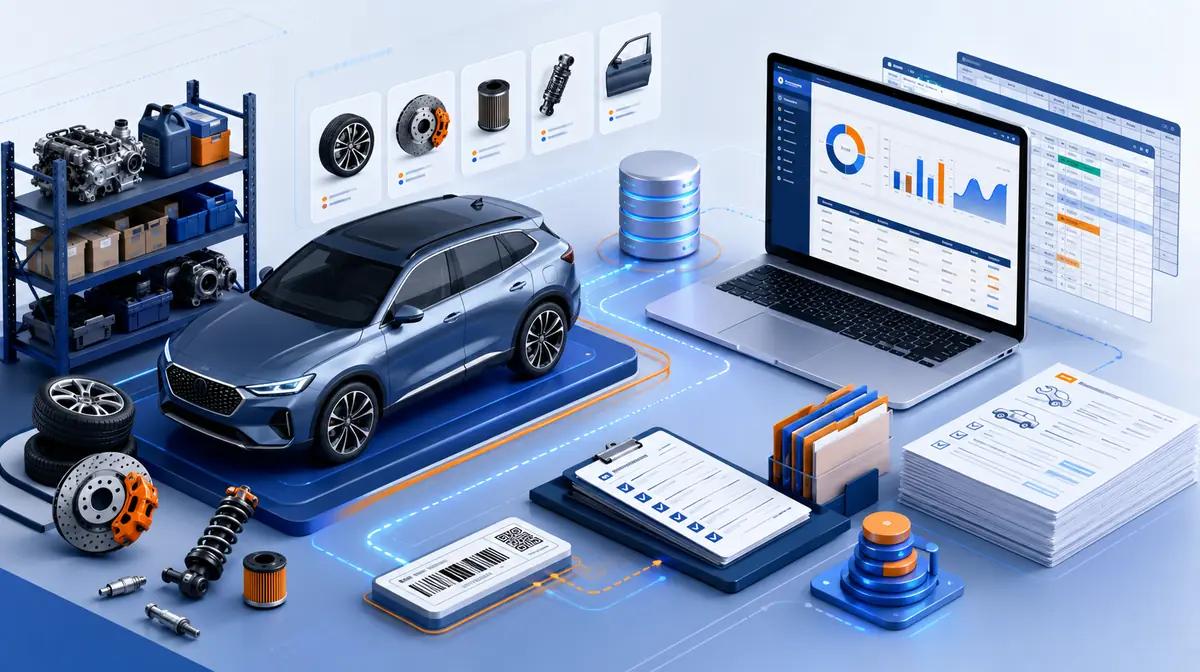
When Automotive Systems Change, Records Need Translation

Automotive migration declares four record anchors: VIN, stock number, part number and repair-order number.

The crosswalk used in our automotive data migration services records which source may populate each destination field, which transformations are permitted and which blank blocks release. Vehicle, part and service records are balanced separately before transfer, exposing duplicate anchors, invalid units and unsupported statuses.

Destination rejections return against the same anchor, allowing correction without rebuilding the accepted portion of the batch.

Decide Which Automotive Source Is Allowed to Win

Automotive files often disagree for legitimate reasons. An appraisal sheet may contain the latest mileage, the DMS may hold the current retail price, a manufacturer reference may control the trim, and a workshop invoice may be the evidence for a service event. Accuracy therefore depends on source authority, not majority voting.

At setup, the source-authority map identifies the approved source for VIN, specification, price, mileage, location, fitment and service date. The guide records units, formats, statuses and naming rules. A conflict is resolved by the map or returned with both sources visible.

Review concentrates on VIN, stock number, part number, repair-order number and approved cross-references. Unsupported records enter an exception register with the field, source and reason, enabling correction or rejection without searching the original batch.

Where Automotive Errors Carry the Greatest Cost

Checks follow the record risk. A dealership queue may prioritise VIN, price, mileage and stock status; a parts catalogue may require SKU uniqueness and fitment consistency; a service archive may focus on vehicle association and chronological order.

Risk-weighted checking distinguishes controlled automotive data entry services from an undifferentiated typing queue. VINs, stock numbers, part numbers, prices, fitment values and service dates receive checks suited to their effect. When written rules cannot settle a conflict, the record moves to the designated reviewer with both sources attached.

Access is divided by automotive workload. A listing operator may require vehicle specifications and images but not customer finance documents; a parts operator may require catalogue references but not dealership CRM records. Registration papers, warranty attachments and driver-related fleet files can be isolated in separate queues. Each production area receives only the fields and documents authorised for that assignment, while the client controls account permissions and record-release decisions.

Free accuracy test

Test Your Automotive Data Entry Services for Vehicle and Parts Data Rules with a Free Pilot Batch

Send a representative sample with your real source files and field rules. We will return a review-ready output so you can assess the workflow before making a financial commitment.

✓ No credit card required✓ No contract required✓ 24–48 hour return
Get Your Free Pilot Batch
Source sampleyour_sample_data.csv
Received
Verified deliveryverified_output.xlsx
Reviewed
▣ Encrypted transfer◉ Quality controlled

Different Automotive Operations Require Different Records

Each automotive data entry workflow follows the organisation’s responsibility; dealer-listing rules are not reused for fitment, fleet or warranty records.

  • Manufacturers: component, supplier, production-document and authorised master-record support.
  • Dealerships: DMS records, new and used inventory, vehicle listings, CRM updates and service documents.
  • Parts suppliers: SKU creation, product attributes, inventory, cross-references and digital catalogues.
  • Aftermarket companies: ACES/PIES preparation, fitment mapping, product enrichment and channel feeds.
  • Marketplaces and auctions: seller records, vehicle specifications, condition reports, images and lot data.
  • Fleet and rental businesses: vehicle masters, inspections, maintenance histories, registrations and branch records.

Match the Delivery Rhythm to the Automotive Queue

Automotive workloads do not all run at the same speed. Dealership inventory needs short update cycles because mileage, preparation status, price and availability can change within a day. Parts catalogue work follows supplier releases and fitment-review windows. Service archives and fleet histories progress document by document and benefit from stable batch controls.

For an acquisition backlog or recurring stock delta, a dealership can outsource automotive data entry services against its publishing cut-off. Parts businesses may assign catalogue enrichment after a supplier release, while fleets can organise archives by vehicle or date.

Daily returns can separate completed, held and exception records before the publishing cut-off. Parts releases use a fitment review gate; historical files are reconciled by VIN and period. Designated reviewers address identity conflicts, while the client controls releases and scope changes.

Automotive data entry outsourcing is measured at each release gate. Capacity expands through additional stock deltas, supplier releases or archive segments only after the previous gate balances. Price approval, warranty eligibility, technical interpretation and publication authority stay inside the automotive organisation. The delivery team completes the documented work without becoming the vehicle, parts or service-data owner.

Manufacturers can also assign a defined supplier-master or component-document queue when its acceptance rules are documented.

Resolve Three Automotive Handover Decisions

How Are Conflicting VIN or Specification Values Handled?

The VIN and supporting source documents are compared according to the project’s precedence rules. If a make, model, trim or engine value cannot be supported, the record is returned with the conflicting fields identified. It is not resolved by selecting whichever value appears most often.

Protecting Vehicle Identity during Price and Status Updates

Yes. Identity fields can be protected while price, mileage, availability, promotion and image order are maintained as separate commercial or channel values. The exact update method depends on the authorised DMS, website or marketplace template.

The Return Path for an Incomplete Fitment Relationship

The affected part number and vehicle application are placed in the exception output with the missing year, make, model, engine, trim or submodel field. The manufacturer, catalogue administrator or authorised specialist confirms the relationship before it is returned for entry.

Resolve the Automotive Exception That Keeps Returning

Vehicle identity, inventory, fitment, listing, service and fleet information should work together without becoming indistinguishable.

Bring the failed dealer upload, unresolved VIN conflict, unmatched image folder or fitment exception that is holding back the next release. Shri Data Entry Services will define the controlling source, required output and escalation point for that record type, then show how it can move through an automotive data entry services workflow without weakening the vehicle or part master.

Automotive Project Experience

Automotive data case studies

Project Name: Aftermarket Catalog Migration

Problem: Supplier files used inconsistent part references and compatibility structures. For the Aftermarket Catalog Migration in Australia workload, channel teams had to compare supplier sources manually, slowing publication and increasing the risk of inconsistent product records.

Solution: Products were mapped to approved part, brand and vehicle hierarchies with uncertain fitment held. For Aftermarket Catalog Migration in Australia, sKU and channel relationships were checked before delivery, while unsupported attributes and probable matches entered a separate review queue.

Outcome: PIM-ready catalog files and a fitment exception register were delivered. Following delivery for Aftermarket Catalog Migration in Australia, channel teams could publish confirmed products from a clean file and resolve supplier exceptions without rechecking the complete catalog.

Title: Automotive Catalog Manager
Industry: Aftermarket Parts
Country: Australia

Project Name: Dealer Inventory Refresh

Problem: Dealer exports contained stale status, inconsistent features and incomplete VIN-linked information. For the Dealer Inventory Refresh in United Kingdom workload, channel teams had to compare supplier sources manually, slowing publication and increasing the risk of inconsistent product records.

Solution: Listings were aligned by VIN and stock number under approved status and source-priority rules. For Dealer Inventory Refresh in United Kingdom, sKU and channel relationships were checked before delivery, while unsupported attributes and probable matches entered a separate review queue.

Outcome: Channel-ready inventory files and a vehicle-level review list were prepared. Following delivery for Dealer Inventory Refresh in United Kingdom, channel teams could publish confirmed products from a clean file and resolve supplier exceptions without rechecking the complete catalog.

Title: Dealer Systems Lead
Industry: Automotive Retail
Country: United Kingdom

Project Name: Workshop Archive Conversion

Problem: Historical service documents could not be retrieved by vehicle or visit. For the Workshop Archive Conversion in United States workload, reviewers spent additional time opening individual files because filenames and folder locations did not answer common retrieval questions.

Solution: Files were indexed by VIN, job number, visit date and approved document class. For Workshop Archive Conversion in United States, each index row retained its source filename or document reference, and unclear classifications were separated for records-owner review.

Outcome: A searchable service-history index and illegibility register were delivered. Following delivery for Workshop Archive Conversion in United States, users could search the completed register by approved metadata while unresolved files remained visible for targeted review.

Title: Service Operations Director
Industry: Vehicle Maintenance
Country: United States

Client Feedback

Feedback related to automotive data projects

Catalog migration feedback

4.5/5

“The team understood why we could not guess fitment from a similar part description. Our product specialists received a short, well-referenced review list instead of having to inspect the entire catalogue again. Excellent work—the consistency across the batch made review much easier.”

Samuel T.
Automotive Catalog Manager
Australia

Dealer inventory feedback

4.5/5

“We were able to refresh dealer inventory without losing the VIN and stock-number trail. The exceptions were organised clearly enough for each dealership to answer only the records it owned. The turnaround was impressive and helped us keep the project on schedule.”

Emily H.
Dealer Systems Lead
United Kingdom

Workshop archive feedback

4.5/5

“I appreciated that unreadable workshop notes were never filled in from assumption. Every query pointed us straight to the repair order and page, which made checking the archive surprisingly quick. Outsourcing to SDES has delivered meaningful savings in time and operating cost.”

Jacob R.
Service Operations Director
United States