
Candidate profile entry
Approved identity, contact, location and availability fields are created or updated in the ATS.
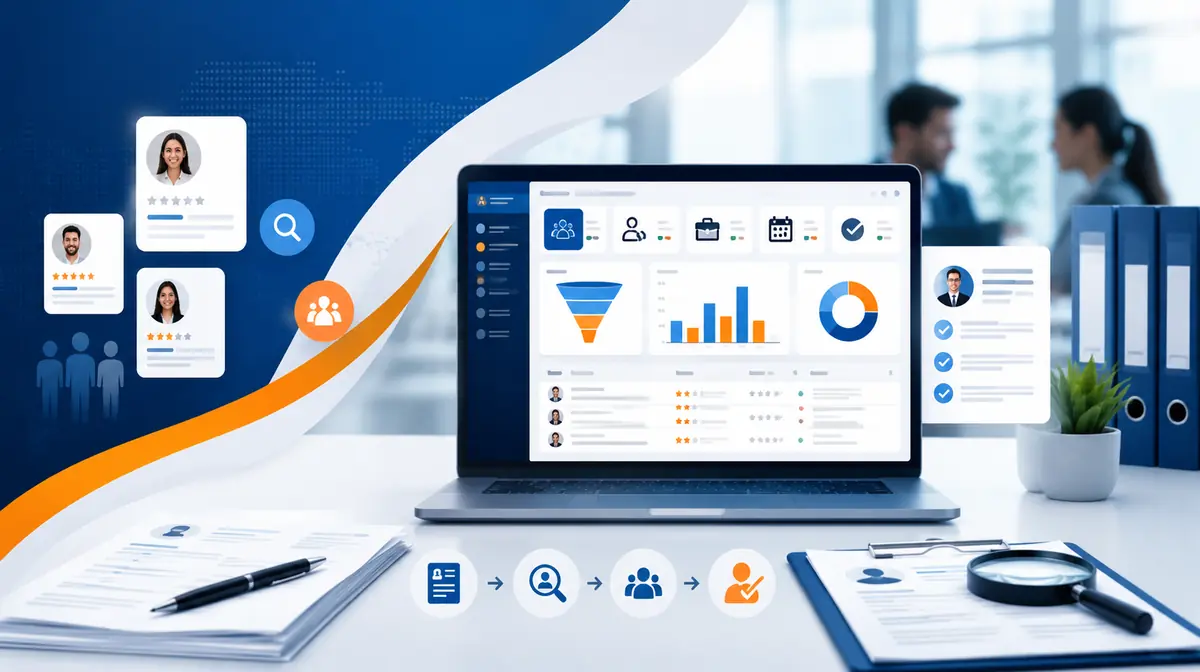
Candidate information arrives through resumes, forms, job boards, email and recruiter notes. SDES provides staffing and recruiting data entry services that organise supplied facts into usable ATS and recruitment records.
Our professional operators work within approved candidate-matching, status and privacy rules. Agencies and internal talent teams can outsource recruitment data entry for migrations, sourcing administration or recurring queues while recruiters retain suitability, screening and hiring decisions.
Similar names and duplicated applications can fragment recruitment history or attach documents to the wrong person.
Project setup confirms ATS IDs, email and application matching, vacancy structures, status vocabulary and the fields operators may access. Profiles are not merged solely because names and employers look similar.
The recruitment data management solution captures supplied education, employment, skills and contact information without embellishment. An expert recruiter decides relevance, qualification and progression.
Identity, compensation and screening documents can be restricted by field or folder, with uncertainty returned to authorised teams.
An offshore recruitment data entry team can reduce administrative queues without evaluating candidates. SDES enters observable and approved facts only.
Teams that outsource ATS administration receive completed profiles and a candidate-or-vacancy exception register. Hiring authority remains internal.
Approved identity, contact, location and availability fields are created or updated in the ATS.
Employment, education, skills and certifications are transcribed from supplied candidate material.
Vacancy, source, application date and authorised status values are linked to the correct candidate.
Role, location, employment type, requirements and approved requisition fields are prepared for review.
Candidate, vacancy, stage, interviewer and supplied appointment details are maintained.
Approved checks and supporting files are classified without making clearance decisions.
Client, role, assignment, start date and supplied status fields are organised for authorised teams.
Potential duplicates, incomplete profiles and inconsistent status values are identified for review.
Candidate keys, statuses and restricted information are documented.
The pilot includes repeat applicants and conflicting records.
Batches stay aligned with recruiter ownership.
Suitability, screening and uncertain matches remain internal.
Send a representative sample with your real source files and field rules. We will return a review-ready output so you can assess the workflow before making a financial commitment.
Recruitment processing organises supplied facts without evaluating candidate suitability.
Email, application ID and other approved identifiers help prevent duplicate or mixed profiles.
Skills, experience and qualifications are captured from the supplied material without embellishment.
Resumes, contact details and screening documents remain limited to assigned operators and systems.
Prepare candidate and application records during high-volume campaigns.
Structure historical profiles and identify uncertain duplicates.
Maintain approved vacancy, interview and assignment records.
Our professional recruitment data processing follows ATS permissions, approved statuses and candidate-source evidence. Operators never improve a resume by adding unsupported experience.
The client’s expert recruiters retain suitability, screening and hiring decisions. SDES provides offshore administration capacity with candidate-level exceptions.
Problem: Legacy systems contained duplicate applicants and inconsistent statuses.
Solution: Profiles were aligned using approved candidate and application identifiers.
Outcome: Migration files and a duplicate-review register were delivered.
Title: Recruitment Systems Manager
Industry: Staffing Services
Country: Australia
Problem: Recruiters were spending campaign time creating ATS records.
Solution: Candidate facts and vacancy relationships were entered under approved rules.
Outcome: Review-ready applicant queues and incomplete-profile exceptions were prepared.
Title: Talent Operations Lead
Industry: Recruitment Process Services
Country: United Kingdom
Problem: Branch files used inconsistent client and placement references.
Solution: Records were mapped to approved client, worker and requisition masters.
Outcome: A consolidated placement file and unmatched-assignment list were delivered.
Title: Staffing Technology Director
Industry: Contingent Workforce
Country: United States
“Candidate profiles were migrated without treating similar names as duplicates. Our recruiters received complete histories where identifiers matched and sensible review notes where they did not. Good, reliable work, and we appreciate the care taken with the batch.”
Isabella G.
Recruitment Systems Manager
Australia
“Resume information was captured accurately without embellishing skills or experience. That gave consultants a consistent ATS record while leaving candidate assessment entirely with them. The turnaround was impressive and helped us keep the project on schedule.”
Thomas E.
Talent Operations Lead
United Kingdom
“The application backlog became manageable once documents, status and vacancy references were organised together. Each recruiter could focus on their own exceptions instead of searching shared folders. We found the arrangement cost-effective and useful for managing the workload.”
Layla C.
Staffing Technology Director
United States
No. We capture supplied facts; recruiters retain assessment and hiring authority.
Only under approved identity rules; uncertain profiles remain separate.
No. Candidate information is captured without embellishment.
Yes. Access can be limited by field, folder, vacancy and system role.
Yes, after candidate, vacancy and status mappings are confirmed.
Provide representative resumes, ATS fields, statuses and duplicate scenarios.