
Tokyo and Yokohama
Corporate, technology, finance, trade and professional teams can prepare customer, supplier, catalog and document data.
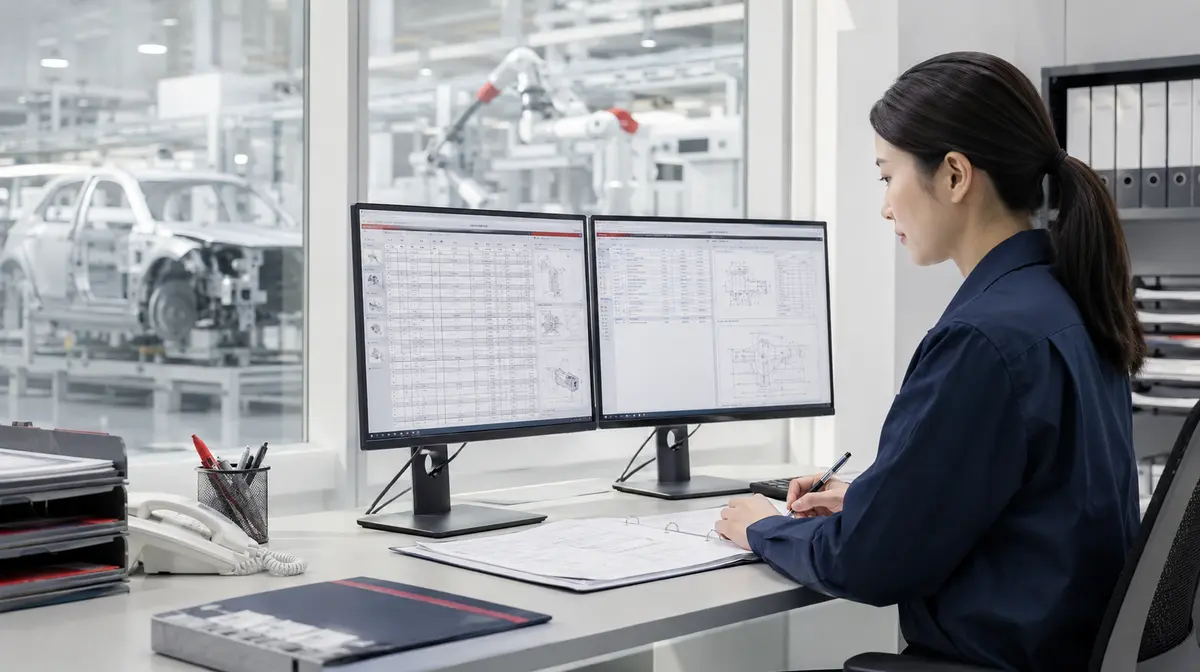
Japanese manufacturers, distributors, logistics businesses and service organisations often require exact alignment between records, source documents and approved terminology. SDES provides data entry services Japan companies can use for product, supplier, technical, customer and administrative data.
India is 3.5 hours behind Japan, creating useful shared-day coordination and a later production window. Professional operators follow Japanese and English field rules, while an expert reviewer checks identifiers, dates, versions and source relationships. Businesses can outsource data entry Japan while technical, linguistic, quality and commercial decisions remain with authorised Japanese staff.
Japanese source data may include kanji, kana, Latin characters, full-width and half-width forms, local address ordering, era or Gregorian dates, and company-specific codes. Setup confirms which forms must be preserved, normalised or stored separately.
Japanese data entry services also need disciplined revision control. Product, supplier and technical records are mapped through approved item, model, plant, document and version references. Names are not reordered, transliterated or translated unless the client supplies a rule.
The offshore solution prepares objective information for ERP, CRM, catalog, archive or reporting use. It does not approve a drawing, interpret a test result, decide product compatibility, change a reservation or create an unsupported translation.
Corporate, technology, finance, trade and professional teams can prepare customer, supplier, catalog and document data.
Manufacturing, commerce, research, tourism and logistics organisations can structure product, technical, booking and shipment records.
Automotive and industrial businesses can maintain parts, suppliers, production-support and quality-document metadata.
Technology, commerce and regional service businesses can prepare CRM, product and operational databases.
Tourism, property, education and regional operations can organise forms, bookings, customer and location records.
Plant, business-unit and approved source ownership remain explicit when records enter a national master.
Approved values remain in designated scripts and language fields without unsupported translation.
Item, model, variant, unit, status and approved commercial fields are organised.
Company, plant, capability, registration and contact fields are prepared from authorised sources.
Approved assembly, component, quantity and revision data are captured without engineering decisions.
Drawings, specifications and reports receive item, plant, document, language and version metadata.
Order, shipment, carrier and delivery fields are linked through approved references.
Company, contact, region, owner and activity fields follow client identity rules.
Japanese and English product fields are mapped to the approved sales-platform structure.
Name, address, item, plant and version rules are documented.
Mixed scripts, revisions and incomplete records enter the pilot.
Batches stay aligned to product, plant or department review.
Language, technical and commercial questions stay with Japanese experts.
Share a sample file, your volume estimate, output format and any compliance or security requirements relevant to your Japan operations. We provide a specific, transparent quote within the agreed response window and include a free pilot batch so you can verify accuracy and output quality before committing to any volume.
Kanji, kana, Latin and width conventions follow the approved source and output guide.
Current and superseded records remain distinguishable through document evidence.
The Japanese client defines privacy, transfer and retention requirements for the professional team.
The expert review method is destination-specific: ERP items require identifiers and units; technical registers require document and revision fields; CRM records require identity evidence; catalogs require item and language alignment.
Offshore production improves capacity without replacing linguistic, engineering, quality or commercial authority. Unclear values remain in a source-linked exception file.
Draft project details require confirmation before publication.
Volume: 42,300 parts and supplier records — completed in 9 weeks
Problem: Plant and supplier files used inconsistent item and revision references.
Solution: Approved identifiers and attributes were mapped while compatibility remained with engineering.
Outcome: An ERP-ready parts file and identifier-conflict queue were delivered.
Title: Parts Data Manager
Industry: Automotive Manufacturing
Country: Japan
Volume: 19,800 products across two language structures — completed in 11 weeks
Problem: Model, variant and language fields did not align across systems.
Solution: Approved content was mapped by item, model, language and channel.
Outcome: Import files and a local-language review list were prepared.
Title: Catalog Systems Lead
Industry: Consumer Electronics
Country: Japan
Volume: 35,600 shipment and proof-of-delivery files — completed in 5 weeks
Problem: Branch archives lacked consistent order and delivery references.
Solution: Documents were indexed by approved customer, order, route, date and status.
Outcome: A searchable archive and unresolved-reference register were delivered.
Title: Logistics Information Director
Industry: Distribution
Country: Japan
Draft quotations require verification and permission.
“Plant and supplier identifiers became consistent without allowing compatibility assumptions into the parts master. That was exactly the control our manufacturing team required. The quality met our expectations and required only limited review.”
Haruto S.
Parts Data Manager
Automotive Manufacturing · Japan
“Japanese and English fields stayed attached to the correct model, and uncertain language returned with the source beside it. Review was much faster than our previous migration. Fast, dependable service that saved our reviewers valuable time.”
Yui T.
Catalog Systems Lead
Consumer Electronics · Japan
“The archive preserved original order and branch references while giving us one searchable structure. Our logistics staff adopted it with very little explanation. The service has been well worth outsourcing to SDES and offers strong value for the cost.”
Ren K.
Logistics Information Director
Distribution · Japan
Yes, under approved script, terminology and mapping rules.
No unsupported translation is created; uncertain language stays with qualified reviewers.
Yes, without making engineering or compatibility decisions.
Current and superseded records retain document and version evidence.
Yes, according to the client’s approved name-field structure.
Include mixed scripts, versions, suppliers and genuine exceptions.
Share representative Japanese and English records, identifiers, versions and destination fields.
Online retailers and marketplace sellers that need accurate product data, catalog management, marketplace listing support and order management data entry handled consistently at scale without burdening their internal team.
Medical practices, billing companies and healthcare providers that handle patient records, clinical data, insurance information and billing documentation requiring precise entry and confidential handling.
Property firms, real estate agencies and title companies managing listing details, transaction records, deed data and client databases across large and growing portfolios.
Accounting firms, finance departments and financial services companies processing invoices, statements, claims, reconciliation records and financial document data at recurring volume.
Law firms and legal departments digitising and managing case files, contracts, compliance records, court documents and legal correspondence with appropriate confidentiality controls.
Freight companies, 3PLs and supply chain teams maintaining accurate shipment records, supplier data, inventory counts and delivery documentation across high-volume operations.
Manufacturers needing product specifications, supplier records, quality inspection data and inventory management data entry for production and procurement systems.
Marketing agencies, digital agencies and business services firms outsourcing data entry, list building, research and campaign data management to a reliable offshore partner.
 eCommerce
 Healthcare
 Real Estate
 Finance
 Legal
Legal
 Logistics
 Manufacturing
 Agencies